
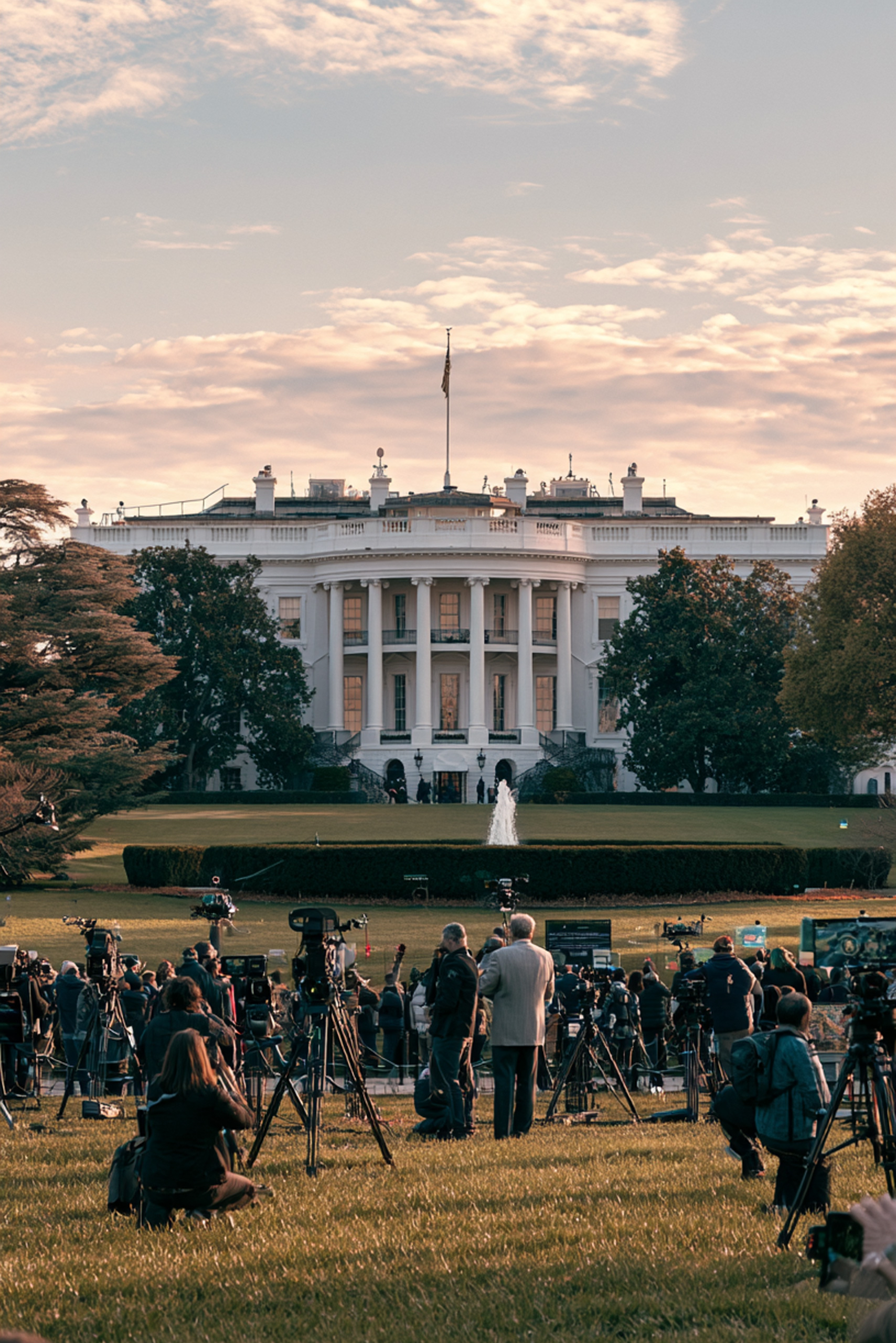
The debate is no longer about politics or sport. It is about what happens when institutions begin competing for attention.
“Power has always depended on symbols. Today, symbols depend on attention.”
For generations, the White House represented something larger than any administration.
Presidents came and went.
Political parties alternated.
International crises reshaped history.
Yet the building itself remained remarkably stable as a symbol of the American state.
That permanence has always been its greatest source of authority.
The recent decision to host UFC Freedom 250 on the South Lawn therefore raises a far more interesting question than whether the event was successful.
It asks what happens when one of the world’s most powerful institutional symbols begins operating as a platform for entertainment.
The event itself was extraordinary.
An octagon installed on one of the most recognizable political sites on Earth.
Corporate sponsors.
Global broadcasts.
Celebrities.
Business leaders.
Political figures.
Sport, media, government and commercial interests sharing the same stage.
Only a decade ago, such an image would have seemed almost unimaginable.
Today, it feels strangely inevitable.
That shift tells us something important.
We are living through an era in which virtually everything has become media.
Companies behave like publishers.
Creators rival television networks.
Sports organizations operate as entertainment platforms.
Governments increasingly recognize attention as a strategic resource.
The White House is no longer communicating only through speeches, ceremonies or policy.
It is communicating through spectacle.
Seen from this perspective, the UFC event becomes less about mixed martial arts than about institutional transformation.
Attention has become a form of power.
And few assets generate attention more effectively than symbols carrying decades of accumulated meaning.
Supporters of the initiative describe it as modernization.
Their argument is straightforward.
Institutions should not isolate themselves from popular culture.
If sport creates connection, why should government remain distant from it?
Critics see something different.
For them, the central issue is not the event itself but the commercialization of symbolic capital.
Public institutions derive legitimacy precisely because they represent interests larger than any individual administration or commercial relationship.
When entertainment, sponsorship and institutional identity begin to overlap, an uncomfortable question inevitably emerges.
Where does cultural participation end?
Where does symbolic appropriation begin?
Importantly, this discussion extends far beyond the United States.
Around the world, governments, museums, historical monuments and national institutions increasingly function as communication assets.
Their symbolic value attracts audiences.
Audiences attract brands.
Brands attract investment.
The boundaries separating public meaning from commercial visibility become increasingly difficult to define.
Perhaps this is the true significance of the White House hosting a global sporting spectacle.
It exposes a transformation that has been unfolding quietly for years.
Institutions no longer compete only through authority.
They compete through relevance.
And relevance increasingly depends on participation within the same attention economy occupied by brands, creators and entertainment platforms.
This may become one of the defining tensions of the coming decades.
Not whether governments should communicate differently.
They almost certainly will.
But whether symbols created to represent permanence can preserve their institutional meaning while operating inside an economy driven by immediacy.
Because once every symbol becomes a stage, the greatest challenge is ensuring it does not stop being a symbol.